As an Amazon Associate, I earn from qualifying purchases. This post contains affiliate links – if you purchase through these links, I may receive a small commission at no extra cost to you.
Quick Answer
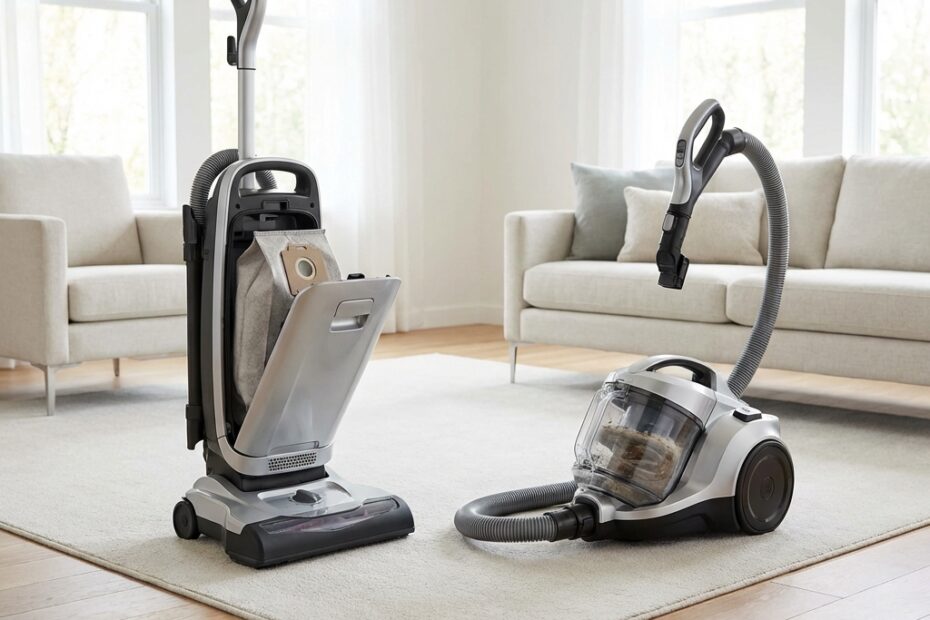
Bagged vacuums are better for allergy sufferers and those who prefer hygienic, sealed disposal. Bagless vacuums are better for budget-conscious buyers who do not mind emptying dustbins and want to avoid ongoing bag purchases. Both can provide excellent cleaning performance – the choice comes down to personal preference and specific needs.
The Bagged vs Bagless Debate
The bagged vs bagless vacuum debate has raged since Dyson popularized bagless technology in the 1990s. Both designs have evolved significantly, and neither is universally superior. Understanding the genuine pros and cons helps you choose based on your actual cleaning needs rather than marketing claims.
This guide breaks down the real differences to help you decide which type is better for your household.
Quick Comparison: Bagged vs Bagless
| Factor | Bagged | Bagless |
|---|---|---|
| Allergen containment | Excellent | Moderate |
| Ongoing costs | Higher (bags) | Lower |
| Maintenance effort | Lower | Higher |
| Dust exposure | Minimal | During emptying |
| Capacity visibility | Hard to see | Easy to see |
| Suction consistency | May decrease as bag fills | More consistent |
| Environmental impact | Some bag waste | No bag waste |
Bagged Vacuum Pros and Cons
Pros of Bagged Vacuums
Superior Allergen Containment
Bagged vacuums excel at keeping collected allergens contained. When you remove a full bag, it seals shut, trapping dust, pollen, pet dander, and dust mites inside. You simply dispose of the sealed bag without exposure. For allergy sufferers, this is the single most important advantage. See our allergy vacuum guide for more on this topic.
Lower Maintenance
Bagged vacuums require less hands-on maintenance. Swap the bag monthly or when full, and the vacuum is ready to go. No rinsing filters, no shaking out dustbins, no dealing with clogged cyclone chambers. For convenience seekers, bags are genuinely easier.
Typically Quieter Operation
The bag provides sound insulation, often making bagged vacuums quieter than bagless equivalents. Premium bagged models like Miele operate in the 70-72 dB range, quieter than most bagless designs.
Often More Durable
Traditional bagged vacuum manufacturers like Miele, SEBO, and Riccar focus on longevity. Their bagged models frequently last 15-20 years with proper maintenance, outlasting many bagless alternatives.
Cons of Bagged Vacuums
Ongoing Bag Costs
Replacement bags cost 3-10 dollars each depending on brand, adding roughly 30-60 dollars annually for typical household use. Over a vacuum’s lifespan, bag costs are significant but rarely noted in marketing.
Potential Suction Loss
As bags fill, airflow decreases and suction can drop. Quality vacuums with bag-full indicators and efficient bag designs minimize this, but it is a legitimate concern. Changing bags before completely full maintains performance.
Bag Availability
Running out of bags means no vacuuming until replacements arrive. Premium brands like Miele require specific bags that may need online ordering. Generic bags exist but may compromise filtration quality.
Bagless Vacuum Pros and Cons
Pros of Bagless Vacuums
No Bag Purchase Costs
The obvious advantage: zero ongoing bag expenses. Over years of use, this saves significant money. Budget-conscious households appreciate maximizing their initial investment without recurring costs.
Visible Fill Level
Clear dustbins show exactly when emptying is needed. You can also see what you are picking up, satisfying for identifying problem areas. Some find this visual feedback motivating for regular cleaning.
Consistent Suction
Quality cyclonic bagless vacuums maintain consistent suction regardless of dustbin fill level. The cyclone separates debris from airflow, preventing the suction loss that can occur with filling bags.
Always Ready
You never run out of bags because there are none. Empty the dustbin when full, and you are ready to continue. No running to the store or waiting for deliveries.
Cons of Bagless Vacuums
Allergen Exposure During Emptying
The biggest bagless drawback: emptying dustbins releases dust cloud that allergy sufferers inhale. Even careful outdoor emptying exposes you to allergens. Self-emptying robot vacuums with sealed bags address this, but traditional bagless uprights do not.
More Maintenance Required
Bagless vacuums require regular filter washing, dustbin cleaning, and cyclone chamber maintenance. Neglect reduces performance significantly. Budget bagless vacuums may need filter replacement frequently despite washable claims.
Potential for Mess
Dustbin emptying can be messy, especially when overfilled. Fine dust does not always fall clean, and dustbin contacts against trash cans kick up particles. This is worse with cheaper designs.
Best Bagged Vacuums
Miele Complete C3 – Premium Bagged
The Miele Complete C3 represents bagged vacuum excellence. German engineering delivers quiet 72 dB operation, powerful cleaning, and 20-year average lifespan. AirClean sealed bags capture 99.9% of particles. The SEB 228 electrobrush handles all floor types.
Check Price on Amazon (paid link)
SEBO Automatic X7 – Premium Upright Bagged
The SEBO Automatic X7 offers premium bagged upright performance. Automatic height adjustment optimizes cleaning across surfaces. Hospital-grade S-class filtration captures fine particles. German engineering provides exceptional durability.
Check Price on Amazon (paid link)
Best Bagless Vacuums
Dyson V15 Detect – Premium Bagless Cordless
The Dyson V15 Detect showcases bagless technology at its best. Root Cyclone technology maintains suction as the bin fills. Laser dust detection reveals particles. The Hair Screw tool prevents tangles. HEPA filtration captures allergens (though bin emptying still releases some).
Check Price on Amazon (paid link)
Shark Navigator Lift-Away – Value Bagless
The Shark Navigator Lift-Away provides excellent bagless performance at mid-range pricing. The lift-away canister offers versatility. Anti-Allergen Complete Seal helps with filtration. Swivel steering improves maneuverability.
Check Price on Amazon (paid link)
Compare in our Dyson vs Shark guide.
Who Should Choose Bagged
- Allergy sufferers: Sealed bag disposal prevents allergen exposure
- Pet owners with allergies: Keep pet dander contained
- Low-maintenance seekers: Less frequent filter washing and cleaning
- Quiet operation priority: Bags provide sound insulation
- Long-term value focus: Premium bagged vacuums last decades
Who Should Choose Bagless
- Budget-conscious shoppers: No ongoing bag costs
- Heavy debris households: Frequent emptying without bag expense
- Visual satisfaction seekers: See what you are picking up
- Environmental focus: Less consumable waste
- Those without allergies: Dustbin emptying is not problematic
Frequently Asked Questions
Which has better suction, bagged or bagless?
Quality examples of both types have excellent suction. Bagless cyclonic designs maintain more consistent suction as they fill. Bagged vacuums may lose some suction as bags fill but start stronger. The difference is minimal with quality vacuums.
Are bagged vacuums really better for allergies?
Yes, significantly. Sealed bag disposal prevents exposure to collected allergens during emptying. Bagless dustbin emptying releases particles into the air, problematic for allergy sufferers regardless of HEPA filtration during operation.
How long do vacuum bags last?
Typically 4-8 weeks of normal household use. Larger households with pets may change monthly. Smaller households or those who vacuum less frequently may go 8-12 weeks. Change when indicator shows full or when suction noticeably decreases.
Are generic vacuum bags OK to use?
Generic bags fit and function but may have inferior filtration that defeats allergy benefits. For maximum allergen containment, use manufacturer bags. For cost savings without allergy concerns, quality generics work adequately.
Do bagless vacuums smell?
Bagless vacuums can develop odors if dustbins and filters are not cleaned regularly. Pet households notice this more. Regular dustbin washing and filter maintenance prevents most odor issues. Bagged vacuums also develop odors if bags are not changed. See our maintenance guide for tips.
Conclusion
The bagged vs bagless vacuum choice depends on your priorities. Choose bagged for superior allergen containment, lower maintenance, and quieter operation. Choose bagless for lower ongoing costs, consistent suction, and never running out of bags.
Both types offer excellent cleaning when you choose quality models. For allergy sufferers, bagged vacuums provide genuine health benefits worth the bag cost. For everyone else, it is largely personal preference.
For more vacuum guidance, see our vacuum buying guide and budget vs premium comparison.